

Who Needs a DEXA Scan?
A DEXA scan may be recommended for older adults, postmenopausal women, and people with risk factors for osteoporosis or low bone density. It may also be appropriate for individuals with a history of fractures, early menopause, long-term bone health concerns, or conditions that can weaken bones. At Fresno Medical Center, Dr. Gurmej Dhillon, MD, and our healthcare team can evaluate your risk factors and determine whether a DEXA scan is appropriate for you. For more information, contact us or schedule an appointment. We are conveniently located at 6069 N First St # 103, Fresno, CA 93710.
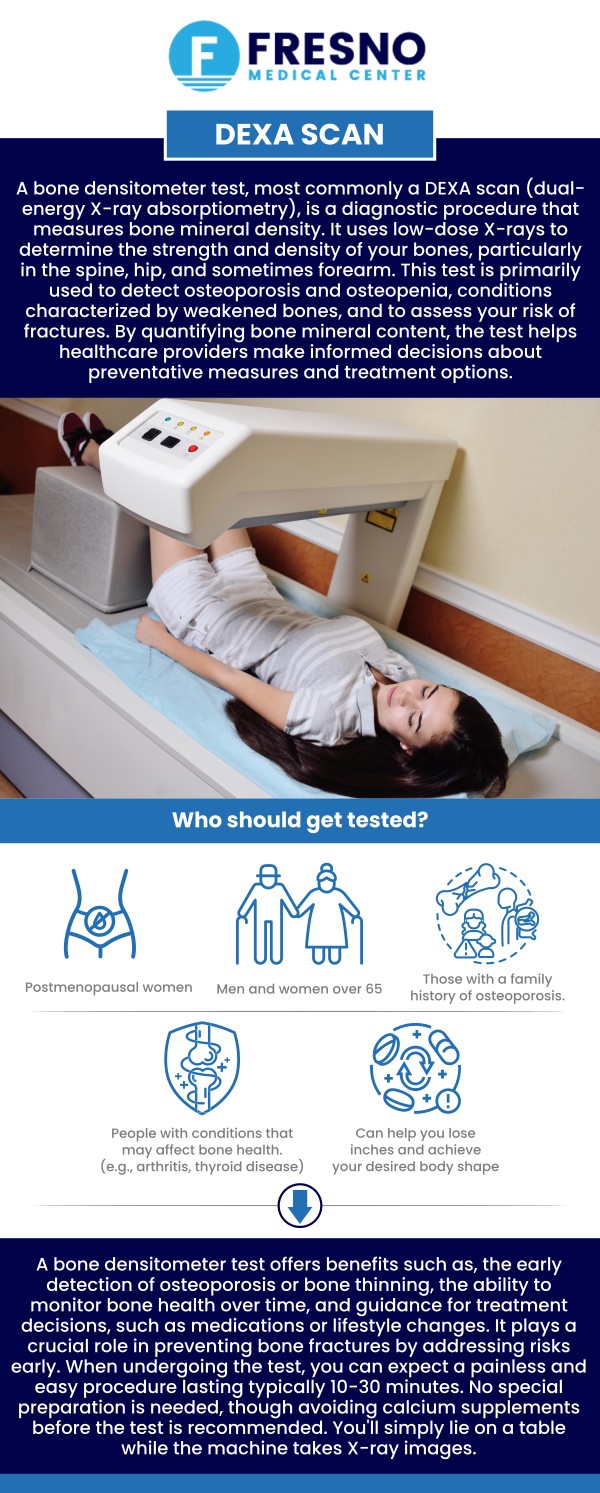
Table of Contents:
Who is generally recommended to get a DEXA scan?
Do older adults need routine bone density testing?
Should people with osteoporosis or osteopenia have DEXA scans?
Can hormonal changes or early menopause affect the need for bone density testing?
How can a doctor determine whether you need a DEXA scan in Fresno, CA?
What Makes Dr. Gurmej Dhillon, MD, and Our Healthcare Team at Fresno Medical Center a Trusted Choice for DEXA Scan Evaluation?
A DEXA scan, also called a DXA scan, is a specialized imaging test used to measure bone mineral density and identify reduced bone strength. It is commonly recommended for people whose age, medical history, hormonal status, or other risk factors place them at increased risk of osteoporosis and fractures. Because bone loss may progress without noticeable symptoms, testing can reveal changes before a fracture occurs. Women age 65 and older are generally recommended to undergo osteoporosis screening with bone density measurement. Younger postmenopausal women may also need screening when clinical assessment shows an increased fracture risk.
A doctor may also consider a DEXA scan for people with additional bone-health concerns, such as:
• A previous fracture occurring after a relatively minor fall
• A family history of osteoporosis or hip fracture
• Low body weight or significant unexplained weight loss
• Early menopause or prolonged loss of normal hormone production
• Medical conditions that can contribute to bone loss
• Long-term exposure to factors known to reduce bone strength
• Evidence of reduced bone density on previous testing
• Noticeable height loss or other concerns suggesting vertebral changes
The decision is individualized because age alone does not describe a person’s complete fracture risk.
Bone density testing becomes increasingly important with age because bone remodeling changes over time, and bone mass can gradually decline. Current screening recommendations support DEXA-based osteoporosis screening for women age 65 and older. For postmenopausal women younger than 65, screening is generally based on the presence of osteoporosis risk factors followed by an assessment of fracture risk.
Recommendations for men are less uniform. The Bone Health and Osteoporosis Foundation advises discussing bone density testing for men age 70 and older and for younger men who have important risk factors. However, the U.S. Preventive Services Task Force has concluded that current evidence is insufficient to determine the overall balance of benefits and harms of routine population screening in men. Therefore, decisions for older men are especially dependent on individualized clinical assessment.
Older adults may particularly benefit from discussing a DEXA scan when they have:
• Experienced a fracture after age 50
• Lost noticeable height
• Developed increasing spinal curvature
• Had repeated falls
• Been diagnosed with a condition affecting bone health
• Previously been told they have low bone density
• Developed additional risk factors for osteoporosis
A doctor can combine DEXA findings with medical history and fracture-risk assessment rather than relying on age alone.
Yes, DEXA scans can be an important part of evaluating people who have osteoporosis or osteopenia. Osteopenia means bone density is below the expected healthy range but has not reached the level typically used to define osteoporosis. A DEXA scan provides objective measurements that help a doctor understand the degree of bone loss and evaluate the patient’s risk of future fractures.
People already diagnosed with reduced bone density may also undergo follow-up DEXA scans. Comparing results over time can help determine whether bone density is stable or changing. However, everyone does not need repeat testing on exactly the same schedule. The appropriate interval can depend on the initial DEXA results, age, fracture history, overall fracture risk, health conditions, and whether the individual is undergoing osteoporosis management.
For someone with osteopenia, a doctor may also consider factors such as:
• Age and sex
• Previous fractures
• Family history of hip fracture
• Smoking history
• Alcohol use
• Body weight
• Other medical conditions
• Overall estimated fracture probability
DEXA results therefore provide valuable information, but they are most useful when interpreted as part of a broader bone-health evaluation.
Yes. Hormonal changes can significantly influence bone health. Estrogen plays an important role in maintaining bone strength, and the decline in estrogen associated with menopause can accelerate bone loss. This is one reason osteoporosis becomes more common after menopause. Someone who experiences menopause earlier than expected may have a longer period of reduced estrogen exposure and may therefore warrant earlier assessment of bone-health risk.
Early or premature menopause does not automatically mean that osteoporosis is present or that every person requires immediate DEXA testing. Instead, a doctor considers hormonal history together with other factors. These may include family history, body weight, previous fractures, nutrition, physical activity, smoking history, and medical conditions that may influence bone metabolism.
A bone density evaluation may become more relevant when hormonal changes occur alongside:
• Early or premature menopause
• Prolonged absence of menstrual periods
• Additional osteoporosis risk factors
• Previous low-impact fractures
• A strong family history of osteoporosis
• Previous evidence of declining bone density
Because bone loss typically produces no early symptoms, discussing hormonal history during routine medical visits can help identify whether earlier screening is appropriate.
A doctor can determine whether a DEXA scan is appropriate by completing an individualized assessment of bone health and fracture risk. The evaluation usually begins with a discussion of age, sex, menopausal status, personal and family medical history, previous fractures, current health conditions, and lifestyle factors. A physical examination may also identify changes such as loss of height or posture that could warrant additional investigation.
During an assessment in Fresno, CA, your doctor may consider:
• Your age and menopausal status
• Personal history of fractures
• Family history of osteoporosis or hip fractures
• Changes in height or posture
• Body weight and weight changes
• Smoking and alcohol history
• Physical activity levels
• Nutrition and overall health
• Conditions associated with reduced bone strength
• Previous bone density results
A DEXA scan uses a low level of X-ray exposure to measure bone mineral density, usually at important skeletal areas such as the hip and spine. The results can help distinguish normal bone density from osteopenia or osteoporosis and may contribute to estimating future fracture risk.
An effective DEXA scan evaluation involves more than simply obtaining a bone density number. The results need to be interpreted in the context of the patient’s age, overall health, fracture history, hormonal changes, family history, and other factors that may influence bone strength. A thoughtful evaluation can help determine whether bone density is within an expected range, whether osteopenia or osteoporosis may be present, and whether ongoing monitoring should be considered.
A comprehensive bone-health assessment can include:
Reviewing individual osteoporosis risk factors
Determining whether DEXA screening is appropriate
Evaluating previous fractures or bone-health concerns
Reviewing hormonal and menopausal history
Interpreting bone mineral density results
Assessing overall fracture risk
Discussing lifestyle factors that support bone health
Developing an appropriate plan for future monitoring
Dr. Gurmej Dhillon, MD, and our healthcare team at Fresno Medical Center can provide an individualized approach to DEXA scan evaluation for patients concerned about osteoporosis, osteopenia, or age-related bone loss. Our team can review each patient’s medical history and risk factors to determine whether bone density testing may be appropriate and explain what the findings mean for long-term bone health. By focusing on early identification and personalized assessment, our clinic can help patients better understand their bone health and make informed decisions about monitoring, prevention, and ongoing care. For more information, contact us or schedule an appointment. We are conveniently located at 6069 N First St # 103, Fresno, CA 93710. We serve patients from Fresno CA, Clovis CA, West Park CA, Mayfair CA, Muscatel CA, Burness CA, Lone Star CA and surrounding areas.

Check Out Our 5 Star Reviews


ADDITIONAL SERVICES YOU MAY LIKE
❱ Employment Physical Exams
❱ DMV or DOT Physical Exams
❱ Immigration Physical
❱ Sports and School Physical Exams
❱ Comprehensive Physical Exams
❱ Physical Exams
❱ Surgical Procedure Service
❱ Functional Medicine
❱ Medical Weight Loss



 Send Text
 How May I Help You?