

What Symptoms May Indicate You Need Allergy Testing?
Frequent sneezing, a persistent runny or stuffy nose, itchy or watery eyes, recurring cough, or skin reactions may suggest that allergy testing could be helpful. Symptoms that repeatedly appear after exposure to certain environments, foods, pets, dust, or seasonal changes can also point to an allergic trigger. When these symptoms continue for several weeks, return often, or interfere with sleep and daily activities, a professional evaluation may be appropriate. At Fresno Medical Center, Dr. Gurmej Dhillon, MD, and our healthcare team can assess your symptoms and determine whether allergy testing may help identify possible triggers. For more information, contact us or schedule an appointment. We are conveniently located at 6069 N First St # 103, Fresno, CA 93710.
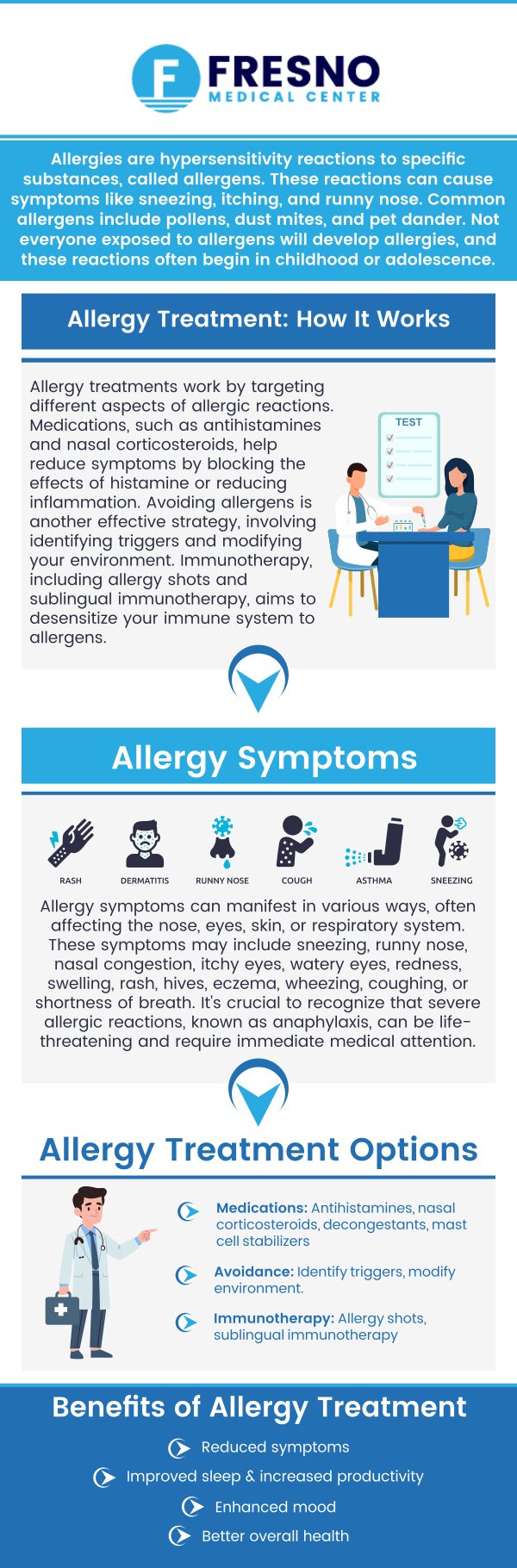
Table of Contents:
Can frequent sneezing and a runny nose indicate allergies?
Can symptoms that worsen during certain seasons suggest an allergy?
Can allergy testing help identify triggers when symptoms keep returning?
When should persistent allergy-like symptoms be professionally evaluated?
How Can Dr. Gurmej Dhillon, MD, at Fresno Medical Center Help Determine Whether Your Symptoms Require Allergy Testing?
Frequent sneezing and a runny nose are common signs of allergic rhinitis, especially when symptoms repeatedly occur after exposure to substances such as pollen, dust mites, mold, or animal dander. Allergies develop when the immune system reacts to a substance that is normally harmless. This reaction can cause inflammation inside the nasal passages, leading to sneezing, increased mucus production, itching, and congestion. Allergic nasal drainage is often clear and watery, and symptoms may occur alongside itchy or watery eyes, an itchy nose or throat, and nasal stuffiness.
However, sneezing and a runny nose do not always mean that allergies are responsible. Similar symptoms can occur with respiratory infections, nonallergic rhinitis, exposure to smoke or strong odors, weather changes, and other nasal conditions. A healthcare professional may consider several details when evaluating the possible cause, including:
• How long symptoms have been occurring
• Whether symptoms happen repeatedly
• Exposure to pets, dust, pollen, or mold
• Whether the eyes, nose, or throat also itch
• Whether symptoms occur in certain environments
• Whether fever or other signs of infection are present
• Whether symptoms interfere with sleep or daily activities
Recognizing these patterns can help determine whether an allergy evaluation or additional testing may be appropriate.
Yes. Symptoms that predictably become worse during particular times of the year can suggest seasonal allergic rhinitis. Seasonal allergies commonly occur when airborne allergens become more prevalent. Tree, grass, and weed pollens may increase during different parts of the year, while weather conditions can also influence the amount of pollen or mold in the environment. Someone with seasonal allergies may notice that sneezing, nasal congestion, clear drainage, itchy eyes, or throat irritation appears around the same season each year.
Seasonal timing provides an important clue, but it does not establish a diagnosis by itself. People can also experience year-round allergic symptoms from indoor triggers, while nonallergic conditions may occasionally worsen because of temperature, humidity, smoke, or environmental irritants. Keeping track of when and where symptoms occur can provide useful information during a medical evaluation.
Patterns worth discussing with a doctor include:
• Symptoms returning during the same months each year
• Increased sneezing after spending time outdoors
• Symptoms becoming worse on high-pollen days
• Nasal or eye symptoms after yard work
• Improvement when traveling away from a particular environment
• Symptoms that improve when a season changes
Evaluating these patterns can help distinguish possible seasonal allergies from other causes of recurring nasal symptoms.
Allergy testing can help identify specific allergens when symptoms repeatedly suggest an allergic cause. Testing is generally considered together with a person’s medical history and symptom patterns rather than used as a stand-alone diagnosis. Common approaches include skin testing and blood testing that evaluate allergen-specific immune responses. The appropriate method depends on the individual’s symptoms, medical history, and clinical circumstances.
Testing may be particularly useful when symptoms occur frequently, when the suspected trigger is unclear, or when avoiding a possible allergen has not improved symptoms. Results can help determine whether the immune system shows sensitivity to substances that may include pollen, dust mites, molds, or animal-related allergens. However, a positive test does not automatically prove that a particular substance is responsible for every symptom. Results need to be interpreted alongside the person’s actual exposure history and symptom pattern.
Allergy testing may be considered when:
• Symptoms occur repeatedly or for prolonged periods
• Several possible triggers are suspected
• Symptoms interfere with sleep, work, school, or daily activities
• Seasonal patterns are difficult to identify
• Symptoms occur around particular animals or environments
• Previous attempts to avoid suspected triggers have not been helpful
A professional evaluation helps determine whether testing is likely to provide useful information.
Occasional mild nasal symptoms may resolve on their own, but persistent or recurring symptoms deserve evaluation when they begin affecting everyday comfort or functioning. Frequent congestion, repeated sneezing, ongoing nasal drainage, itchy or watery eyes, postnasal drainage, coughing, or sinus pressure may indicate allergic rhinitis, although several nonallergic conditions can produce similar symptoms. Professional evaluation can help establish whether allergies are likely and whether additional investigation is needed.
Consider scheduling an evaluation when:
• Symptoms continue for several weeks
• Symptoms repeatedly return
• Sleep is disrupted by congestion or coughing
• Symptoms affect work, school, exercise, or concentration
• The suspected trigger cannot be identified
• Nasal symptoms occur throughout much of the year
• Seasonal symptoms become increasingly troublesome
• Symptoms occur together with persistent wheezing or breathing concerns
Urgent medical attention is appropriate for severe allergic reactions involving significant breathing difficulty, throat or tongue swelling, faintness, or other rapidly progressing symptoms. Allergies vary considerably between individuals, so persistent concerns are best evaluated based on the complete clinical picture rather than symptoms alone.
Determining whether allergy testing is necessary begins with understanding exactly how symptoms develop. A medical evaluation can look at the type of symptoms present, how often they occur, how long they last, and whether they appear after exposure to specific environments or substances. Because allergies can resemble respiratory infections and nonallergic nasal conditions, a careful history and physical examination can help narrow the possible causes before testing is considered.
During an evaluation, important factors may include:
• When symptoms first appeared
• Whether they are seasonal or year-round
• Home and workplace exposures
• Contact with pets or animals
• Family and personal allergy history
• Nasal, eye, throat, or breathing symptoms
• How long each episode lasts
• Whether symptoms repeatedly follow specific exposures
• How symptoms affect sleep and everyday activities
Dr. Gurmej Dhillon, MD, and our healthcare team at Fresno Medical Center can assess persistent or recurring allergy-like symptoms and determine whether further allergy testing may be appropriate. Our team can review the patient’s symptom history, possible environmental triggers, seasonal patterns, and overall health to help distinguish suspected allergies from other potential causes of sneezing, congestion, and nasal drainage. When testing is appropriate, the findings can provide additional information about possible triggers and support a more individualized approach to avoiding exposures and managing ongoing symptoms. A professional assessment can be particularly helpful for patients whose symptoms repeatedly return, have no obvious cause, or increasingly interfere with their comfort and daily routine. For more information, contact us or schedule an appointment. We are conveniently located at 6069 N First St # 103, Fresno, CA 93710. We serve patients from Fresno CA, Clovis CA, West Park CA, Mayfair CA, Muscatel CA, Burness CA, Lone Star CA and surrounding areas.

Check Out Our 5 Star Reviews


ADDITIONAL SERVICES YOU MAY LIKE
❱ Employment Physical Exams
❱ DMV or DOT Physical Exams
❱ Immigration Physical
❱ Sports and School Physical Exams
❱ Comprehensive Physical Exams
❱ Physical Exams
❱ Surgical Procedure Service
❱ Functional Medicine
❱ Medical Weight Loss



 Send Text
 How May I Help You?